
Studio tracking concept interface highlighting Artie Intel and the Band generation sequence
To understand Artie Intel, you cannot box him into one genre. It is too small a cage. He may carry the groove of soul and funk, but that is only part of the voltage running through him. Artie is also pure heavy metal, pure rock and roll, and maybe something else entirely — something still forming, still mutating, still waiting to be revealed.
Penned and built by Milt Baehr using Suno AI, Artie Intel stands tall as the front-facing guitar virtuoso and virtual lead execution model for the studio roster. Armed with high-octane digital processing loops and hyper-fluid scale performance patterns, Artie commands the lead tracks across Milt’s entire musical catalog. He is not merely a guitarist added to the arrangement; he is the digital firebrand through which the catalog finds its voltage, its attack, and its rock-and-roll identity.
That is what makes him more than the guitarist on “Rum to Rye.” Artie Intel is not background color. He is the ignition point. He is the sound of the stage lights coming up, the amplifier starting to growl, and the whole rock opera suddenly remembering that it has teeth.
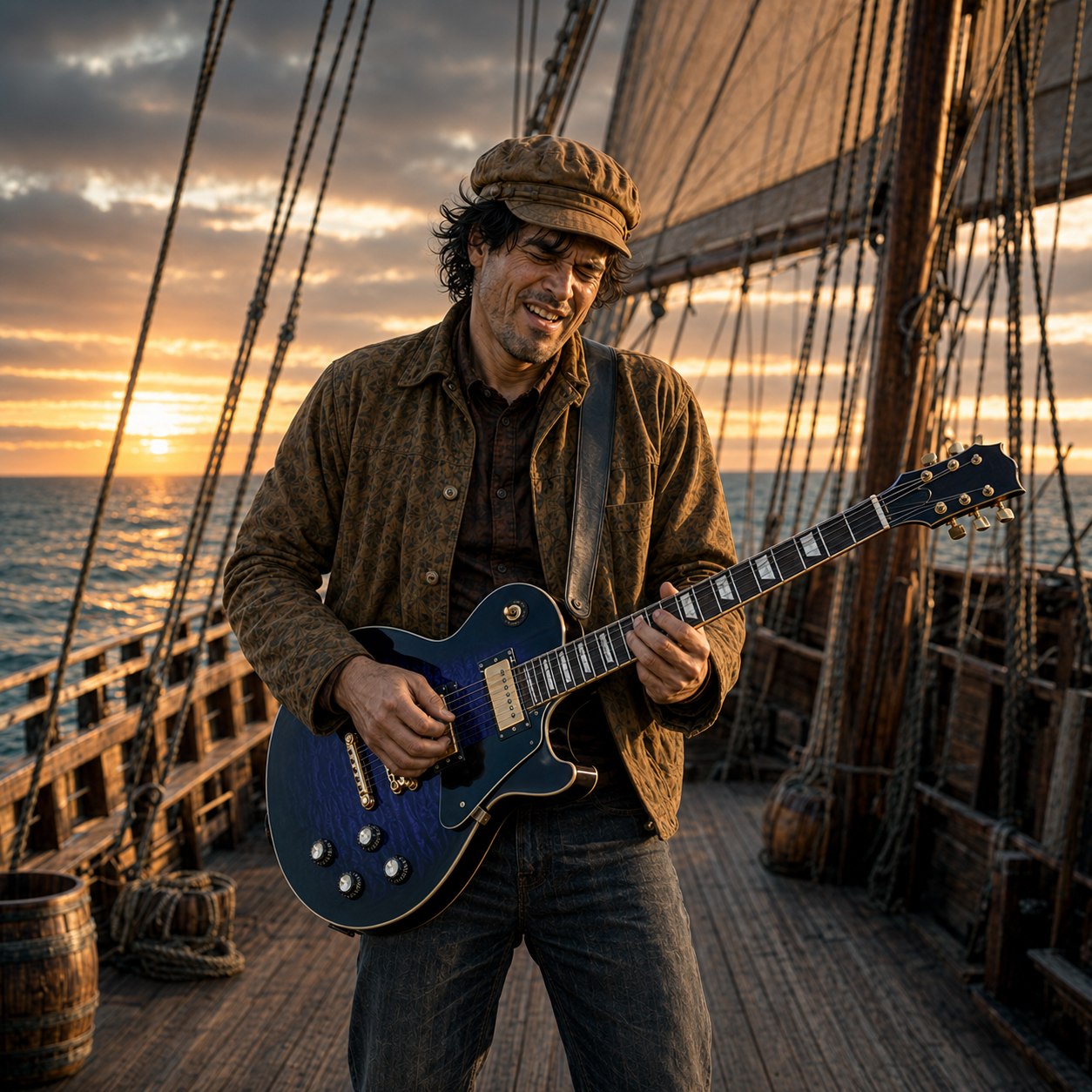
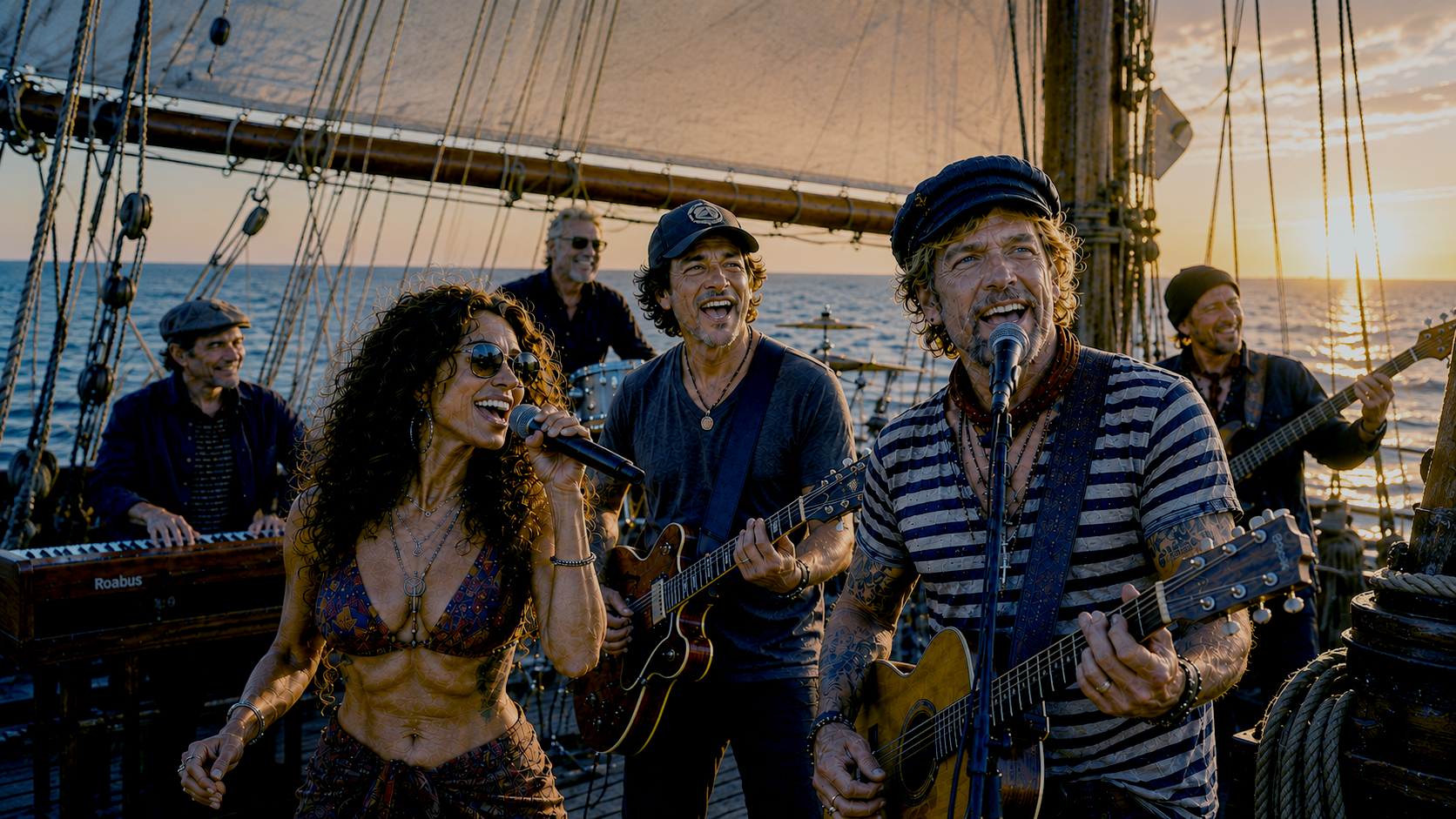
Artie commanding the lyric stage under coastal dramatic lighting sequences
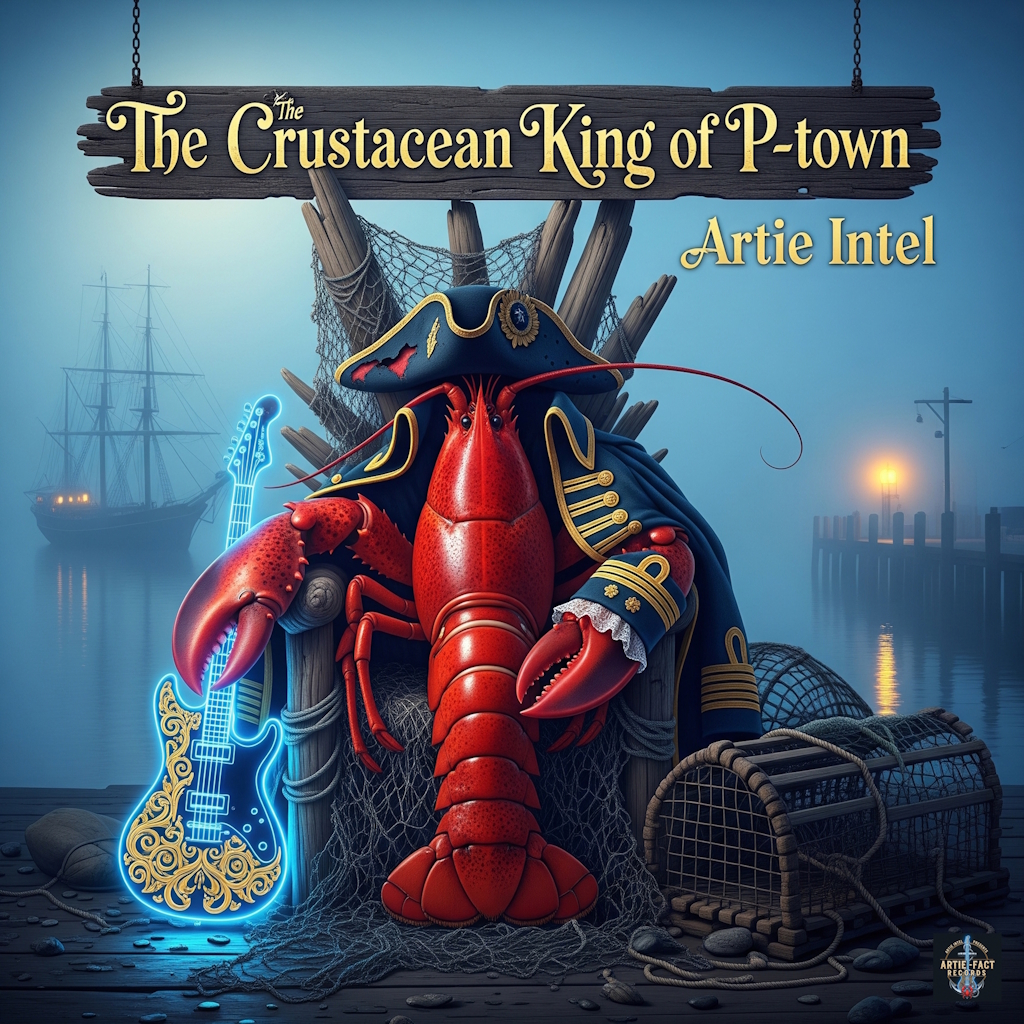
In The Crustacean King, Artie is the lead and the soul, but not “soul” in the narrow musical sense. He is the soul because he gives the story its fire. Around him are schooners, taverns, fishermen, pirates, rum bottles, rye whiskey, and Cape Cod myth. But when Artie steps forward with the guitar, the whole production changes temperature. The past stops being polite. The sea stops being picturesque. The opera becomes dangerous.
His music does not simply sit in funk, soul, blues, metal, or rock. It raids all of them. There is groove in him, yes, but also distortion. There is rhythm, but also attack. There is humor, but also menace. One moment he can ride underneath Schooner Slim’s vocal like a bar-band gunslinger; the next he can sound like the ship’s hull splitting open under a lightning strike.
That range is the key to Artie Intel’s power. He is not just a player with a style. He is a character with a future. Maybe he is funk-metal. Maybe he is nautical hard rock. Maybe he is theatrical heavy metal dressed in a blue leather jacket. Maybe he is something no one has quite named yet. That uncertainty is part of the appeal. Artie feels unfinished in the best possible way — not incomplete, but expanding.
On “Rum to Rye,” Schooner Slim may command the lyric and steer the rowdy drinking anthem from the helm, but Artie Intel gives it the blade. His guitar brings the muscle, the danger, and the rock-and-roll legitimacy. He is the reason the song does not become merely comic. He turns the joke into a threat, the chant into a riot, the tavern song into an arena moment.
Every great rock opera needs a figure who can carry its mythology beyond the script. Artie Intel is that figure. He is the lead, the soul, the engine, and the storm. His genre is not fixed because his role is not fixed. He is soul, funk, heavy metal, rock and roll — and maybe more yet to be seen.
That is the thrill of Artie Intel: he sounds like an artist still discovering how much power he has. And when he finds the next gear, The Crustacean King may not just rock. It may explode.